What is a combi boiler
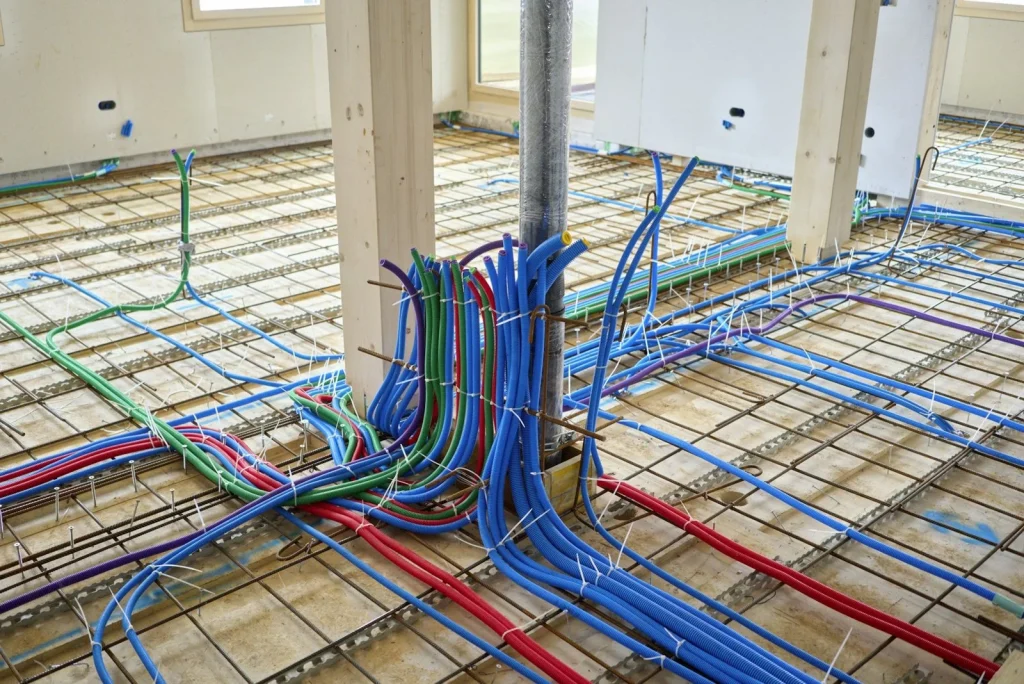
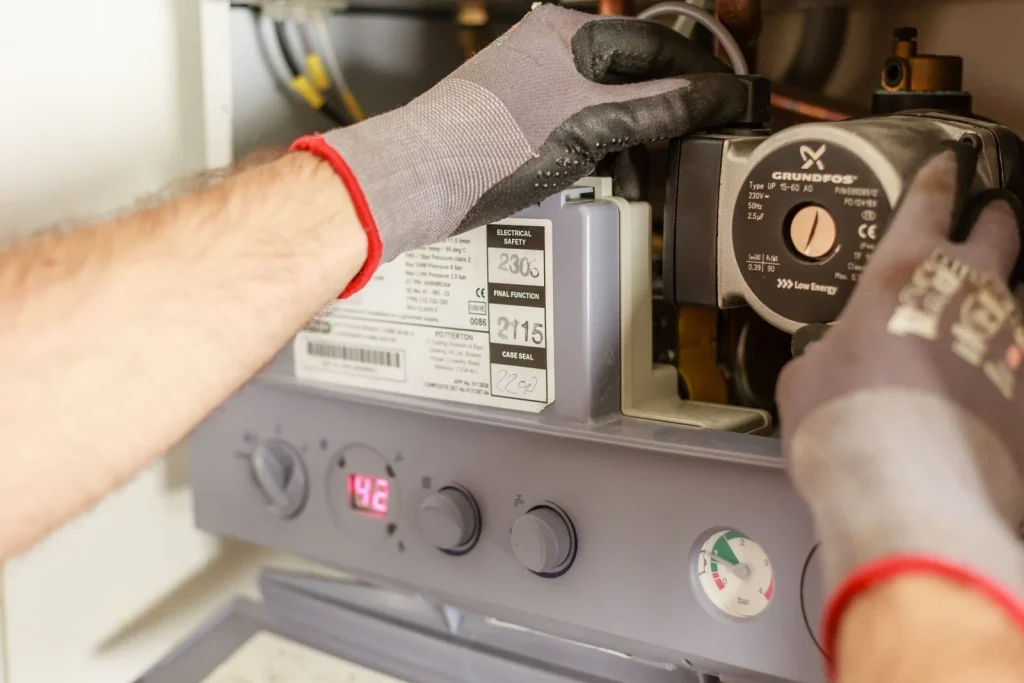
A combi boiler does two jobs: it heats the house and prepares hot water. The first circuit serves the radiators and underfloor heating. The second heats water the moment you open the tap.
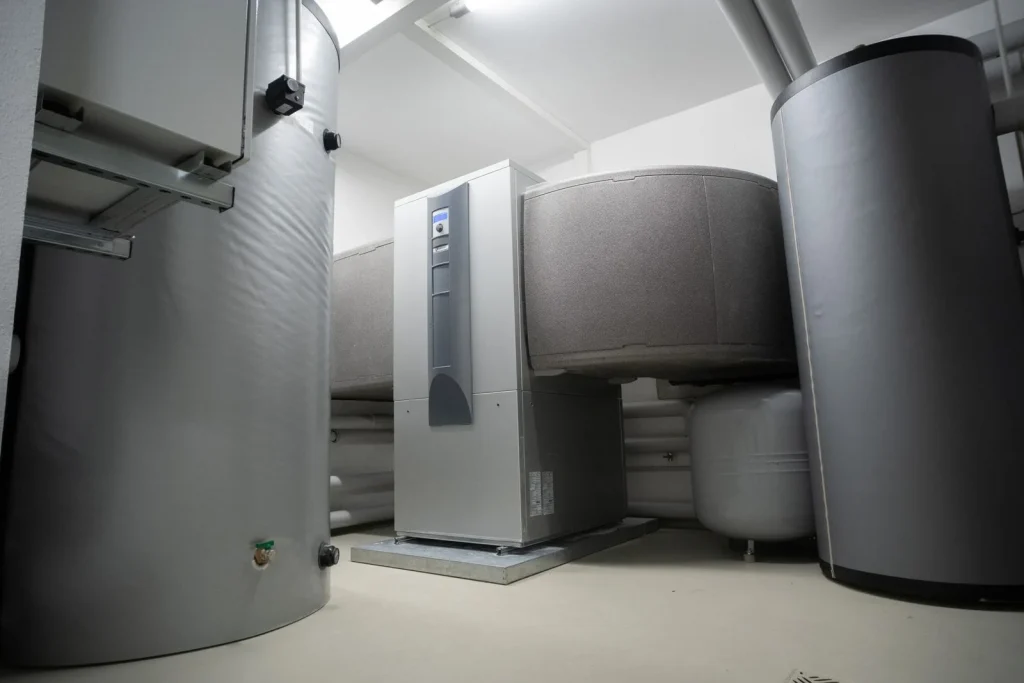
A system boiler only provides heating. Hot water for it is prepared by a separate indirect water heater.
| Parameter | Combi boiler | System boiler + water heater |
|---|---|---|
| Space | Compact, everything in one casing | Requires space for the water heater |
| Hot water | Instantaneous, no reserve | Stored in a tank, stable temperature |
| Several outlets at once | Pressure is shared between taps | Enough for 2-3 outlets at once |
| Suitable for | Apartment, house with 1-2 bathrooms | House with 2 or more bathrooms |
How to calculate heating output
For a preliminary estimate, use the rule of thumb: about 1 kW per 10 m² with ceilings up to 2.7 m and average insulation. A 150 m² house needs a boiler of roughly 15 kW. Add a 10-15% margin for cold days.
If the house is poorly insulated, the windows are old or the ceilings are higher than 3 m, the load increases. An accurate figure comes from a room-by-room heat loss calculation.
How to estimate hot water output
Domestic hot water output is given in litres per minute. You can work out a guideline yourself:
Litres per minute = boiler output (kW) × 14.3 / water temperature rise (°C).
A 24 kW boiler heating water by 25 °C delivers about 13-14 l/min. That is enough for one shower and a kitchen tap. If the house has two bathrooms used at the same time, instantaneous hot water will not be enough. In that case it is better to choose a system boiler and an indirect water heater.
Gas, condensing or electric
A gas boiler with a sealed combustion chamber is the most common choice for a private house in Tashkent. It draws air from outside through a coaxial flue, so it is safe for living spaces.
A condensing boiler recovers additional heat from the flue gases. The gain is noticeable when the return water is colder than 55 °C: with underfloor heating and radiators sized for low temperatures. It saves gas over the entire service life.
An electric boiler needs neither gas nor a flue. It suits homes without gas or works as a backup heat source. Before buying, check the allocated capacity of your power supply: a 12 kW boiler needs a three-phase connection.
A solid fuel boiler is used where there is no gas and little electricity. It needs space for fuel storage and regular maintenance.
What else to look at
- Built-in pump and expansion vessel. Wall-hung boilers already have them. For a large house, the built-in vessel is often too small; read more in our article about the expansion vessel.
- Output modulation. A boiler with a wide modulation range cycles on and off less often, runs more quietly and wears less.
- Operation at low gas pressure. In the cold season, the gas pressure in the network may drop. Ask the seller what minimum pressure the boiler needs to operate reliably.
- Controls. A room thermostat and weather-compensated control keep the temperature steady and reduce gas consumption. Read more in our article “Energy-efficient heating”.
- Service. Check whether there is a service centre and spare parts in your city.
Common mistakes
- The boiler is oversized by a factor of two. It cycles frequently, wears out faster and runs at lower efficiency.
- Output is calculated for heating only, forgetting about hot water in a house with several bathrooms.
- A condensing boiler is installed on a system with a high return temperature. You pay more but save nothing.
- No filter is fitted, and the old system is not flushed before the new boiler is connected.
Important: an area-based calculation only gives the order of magnitude. The final model is chosen after a heat loss calculation and a check of the flue, gas and electrical connections.
Send ThermoHouse the floor area of your house, the number of bathrooms and the type of system. We will select a FERROLI or ZOTA boiler for your home and match it with the radiators, pump and water heater. Contact us →