What an expansion vessel is for
Water expands when heated. In a heating system, its volume grows by about 3-4% from cold to operating temperature. If the extra water has nowhere to go, the pressure rises and the safety valve opens.
A membrane expansion vessel takes in this water and returns it to the system as it cools. The pressure stays stable, and the boiler and radiators work without overload.
How a membrane vessel works
Inside the steel body, a rubber membrane divides the vessel into two parts. On one side there is air or nitrogen under pressure. On the other is the heating water from the system. When the water expands, it compresses the air cushion.
A heating vessel and a potable water vessel are not the same thing
| Parameter | For heating | For water supply |
|---|---|---|
| Body color | Usually red | Usually blue |
| Membrane | Designed for hot heating water | Food-grade, for drinking water |
| Where it is installed | Heating system next to the boiler | Pumping station, well, hot water cylinder |
You must not use a water supply vessel in a heating system or vice versa: the membrane is not designed for those conditions.
How to calculate the volume
A simple guideline is 10-12% of the water volume in the system.
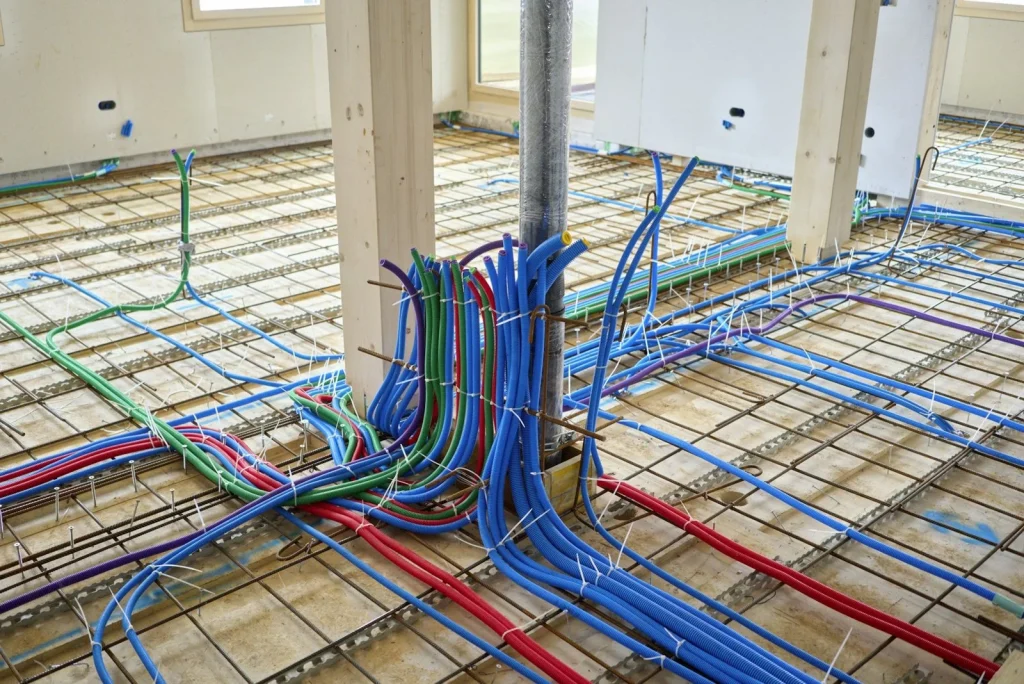
The water volume in the system can be estimated from the boiler output: roughly 10-15 litres per 1 kW for a radiator system. With underfloor heating there is more water.
Example. A 20 kW boiler with radiators: 20 × 13 = about 260 l of water in the system. Vessel: 260 × 0.1 = 26 l. Choose the next larger standard size — 35 l.
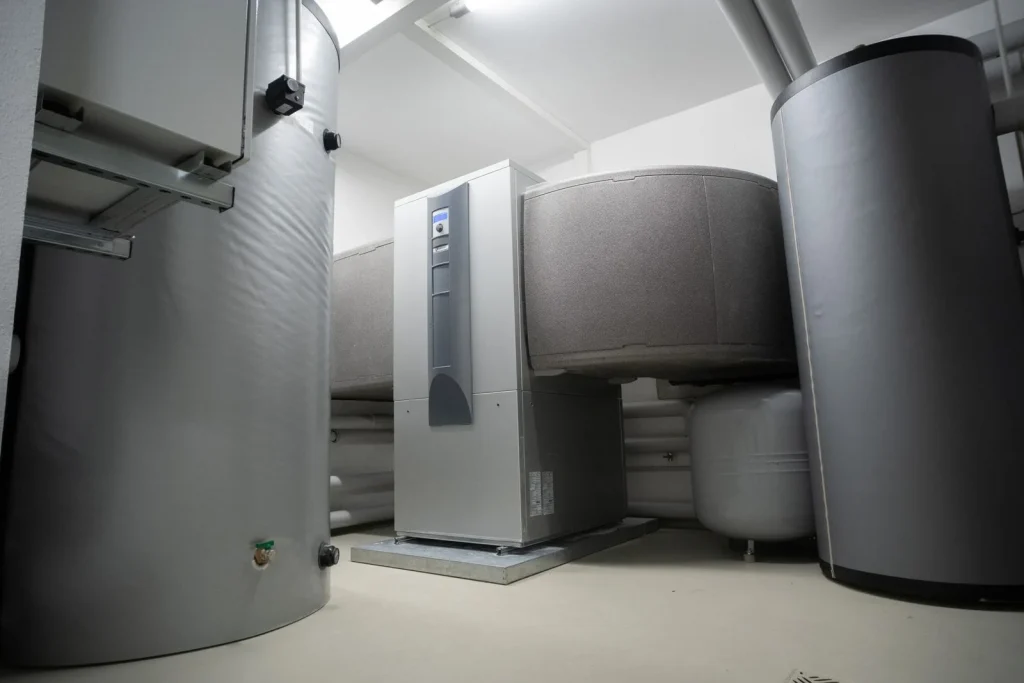
Wall-hung boilers already have a 6-10 l vessel. That is usually enough for an apartment. For a house with many radiators or underfloor heating, an external vessel is added.
What pressure to set
The air pressure in the vessel is set before the system is filled:
Vessel pressure = system height above the vessel (m) / 10 + 0.2 bar.
For a two-storey house about 7 m high above the boiler: 0.7 + 0.2 = 0.9 bar, rounded up to 1 bar. The pressure in the system itself is set 0.2-0.3 bar higher when filling.
Signs of a problem with the vessel
- The pressure gauge reading jumps: it rises when heating and drops below normal when cooling.
- The safety valve opens frequently.
- You have to top up the system all the time.
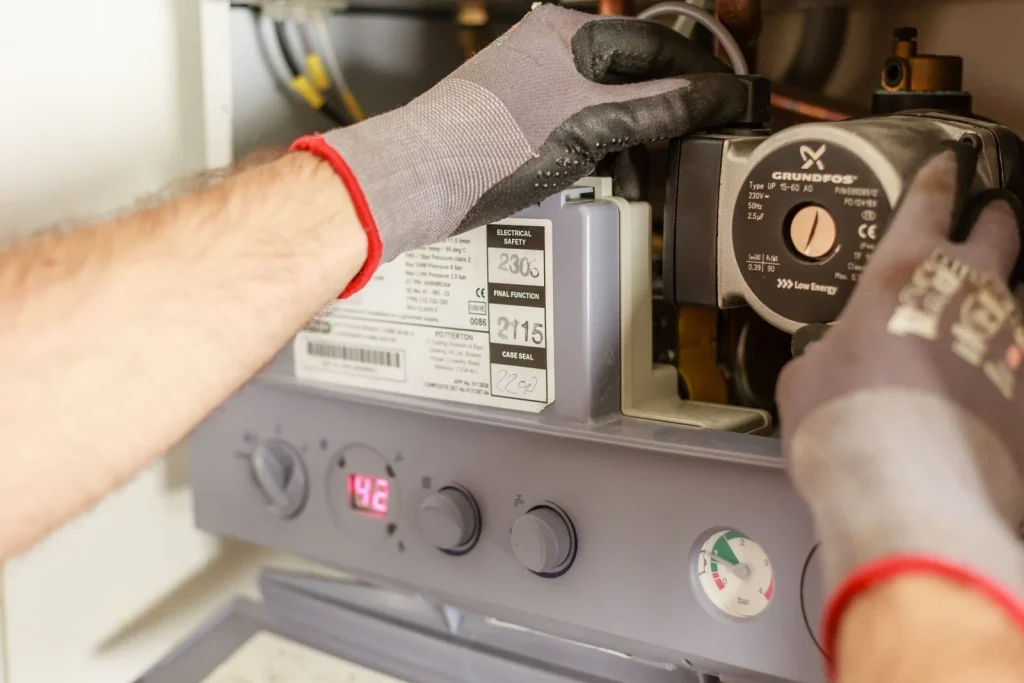
This usually means the vessel is too small, the membrane is damaged or the air charge has escaped. Check the vessel pressure once a year before the heating season.
Important: if the house has an indirect water heater, the hot water circuit needs its own potable water expansion vessel, separate from the heating vessel.
Tell ThermoHouse your boiler output and system type — we will recommend the vessel size and set the pressure during commissioning. Contact us →